
Joshua F. Yarrow1,2,3, Bryan Naranjo3, Valerie C. Del Rey3, Christine F. Conover3, Amanda L. Rodriguez3, Rae L. Van Sandt1, Matthew A. Schiefer3, Dana M. Otzel3
- Geriatric Research, Education, and Clinical Center (GRECC), VA Eastern Colorado Health Care System, Aurora, CO
- Division of Geriatric Medicine, University of Colorado Anschutz, Aurora, CO, USA
- North Florida/South Georgia Veterans Health System, Gainesville, FL
INTRODUCTION
New research compares the Medikors InAlyzer2 and Hologic Horizon A systems for measuring body composition and bone mineral outcomes in adult rats.
Dual-energy X-ray absorptiometry (DXA) is widely used in preclinical research to monitor changes in body composition and bone mineral characteristics over time. For studies involving obesity, metabolism, aging, and skeletal health, researchers depend on precise and accurate measurements of fat mass (FM), fat-free mass (FFM), bone mineral content (BMC), and bone mineral density (BMD).
However, relatively few DXA systems offer a sufficiently large field of view to assess all these parameters in adult rats across a broad range of bodyweights. Even fewer studies have directly compared their measurement precision and accuracy.
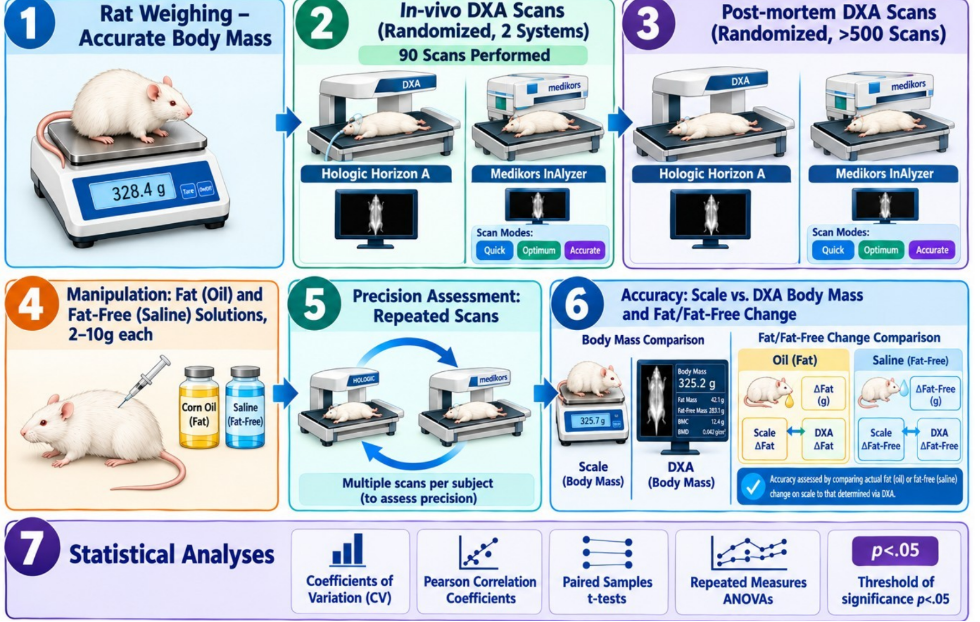
A study led by Joshua F. Yarrow and colleagues at the U.S. Department of Veterans Affairs and the University of Colorado Anschutz addresses this gap. The researchers compared the Medikors InAlyzer2 fan-beam DEXA system with the Hologic Horizon A cone-beam DXA system, equipped with its rat imaging package.
METHODS
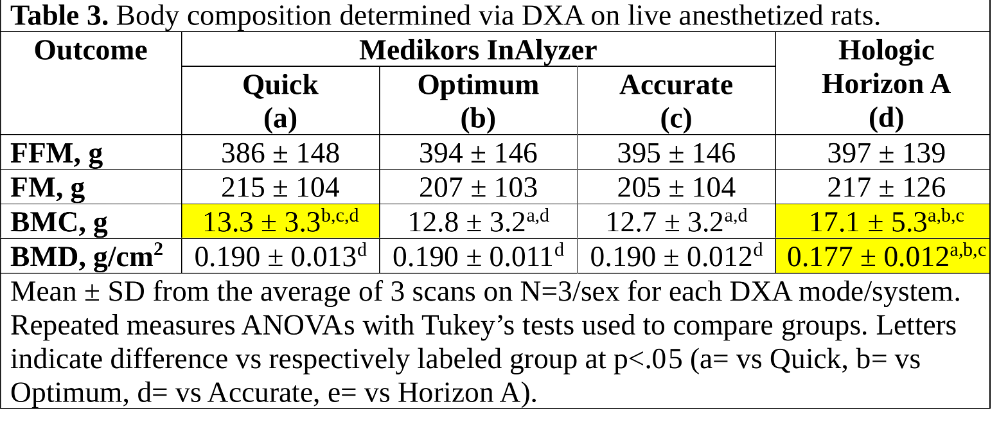
- Model: Sprague-Dawley rats (N=3/sex); 3-7 months; 300-900 g
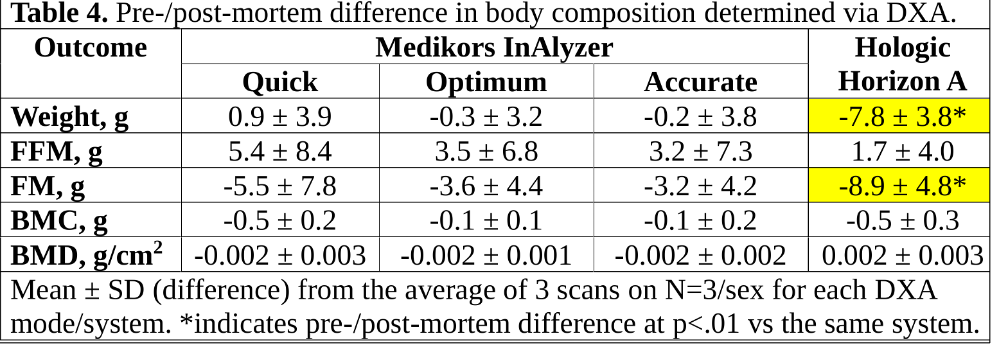
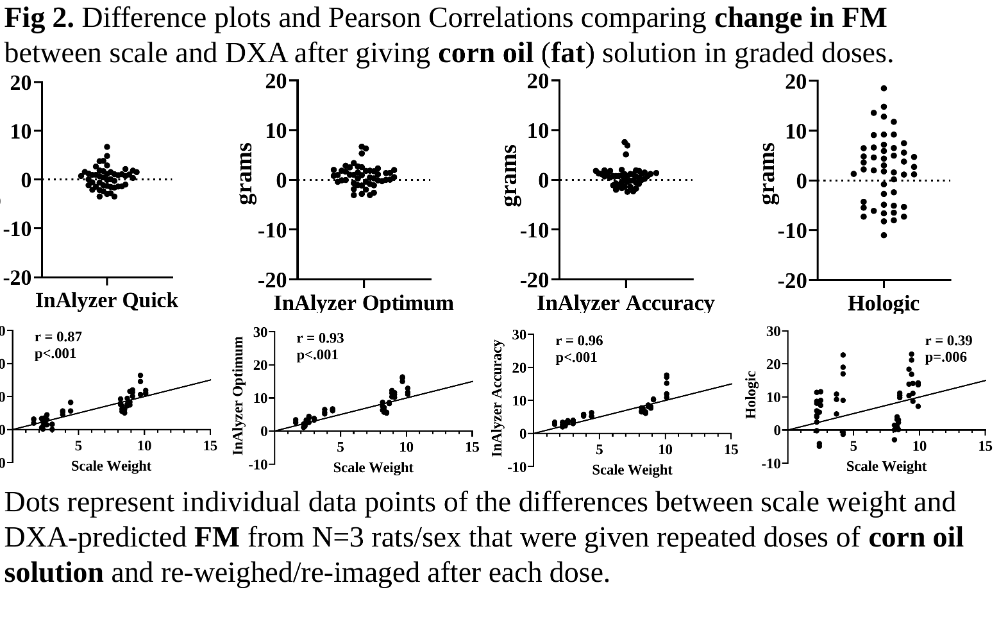
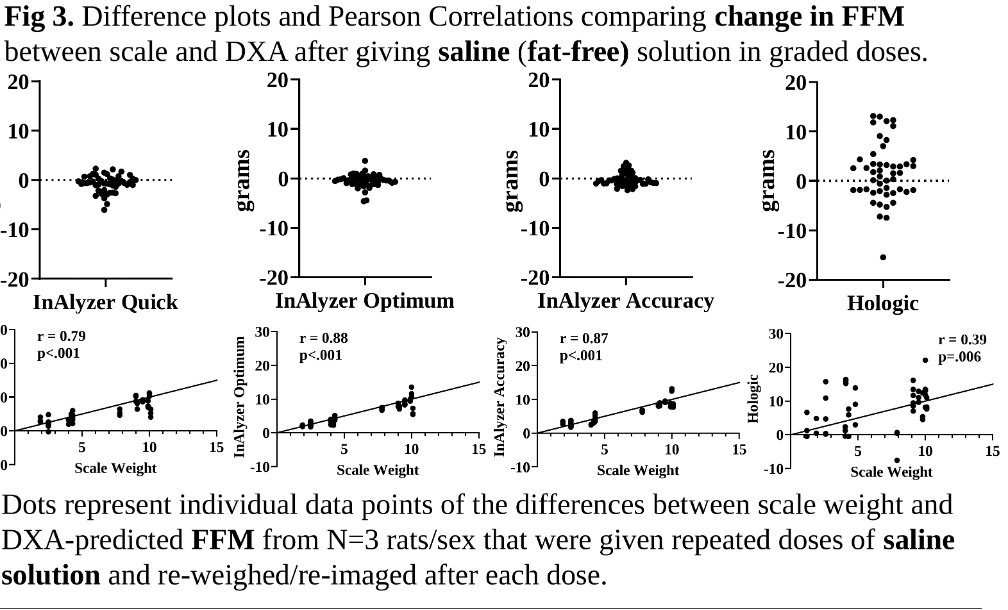
- Outcomes: Body weight, FM, FFM, BMC, and BMD assessed on a Horizon A DXA with rat imaging package vs InAlyzer DXA.
RESULTS
CONCLUSIONS
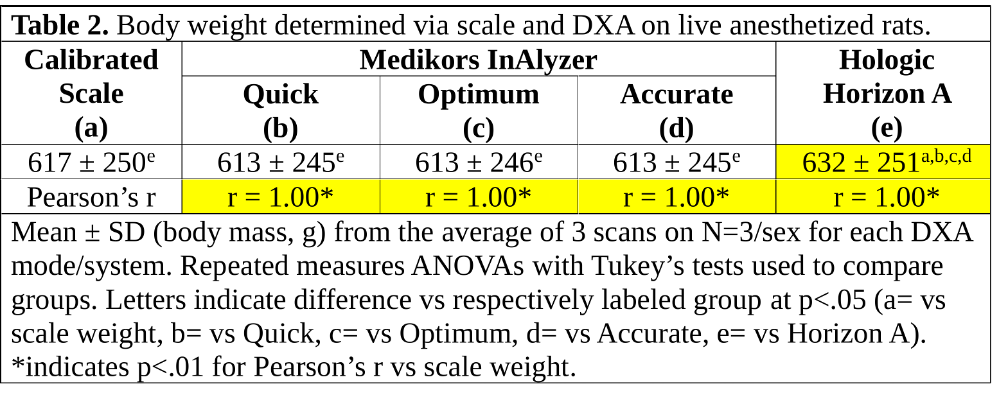
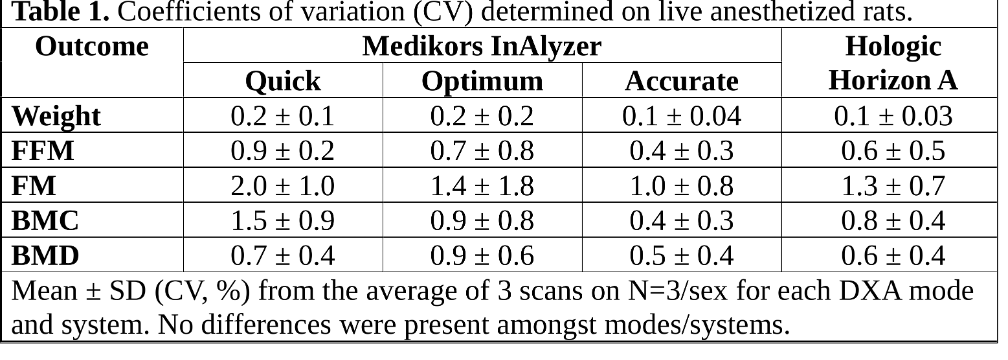
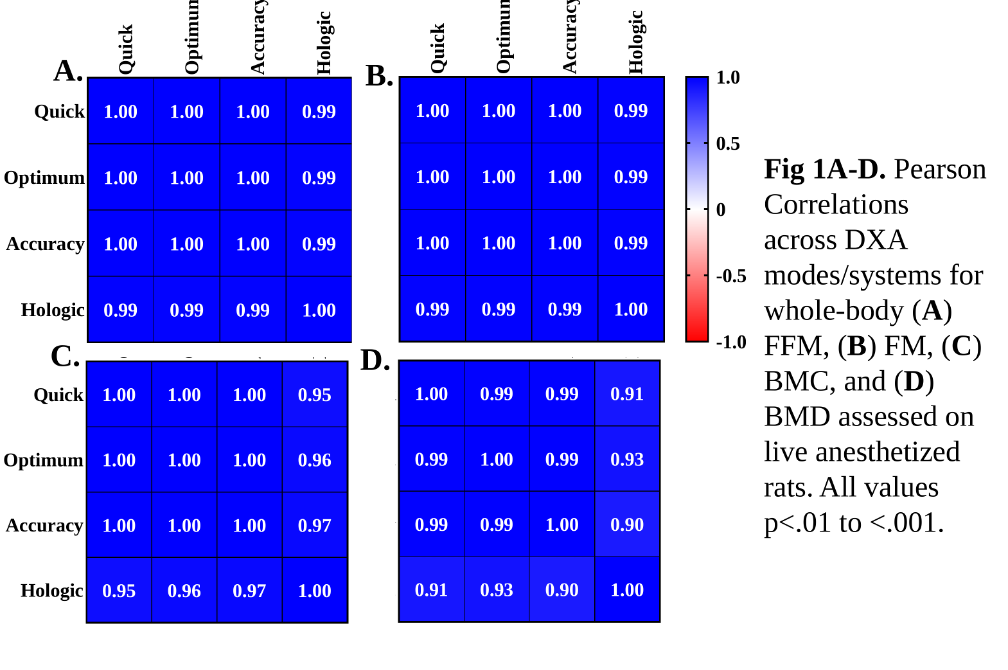
- Over ~600 scans, the cone-beam (Horizon A) and fan-beam (InAlyzer) DXA systems both exhibited high short-term precision in adult rats across the body weight spectrum.
- The fan-beam DXA exhibited more accurate body weight, FM, and FFM predictions across all modes than the cone-beam DXA.
- Studies assessing medium-/long-term precision and accuracy and comparing bone mineral outcomes to a gold-standard measure (e.g., microCT or ash weight) are warranted.
ACKNOWLEDGMENTS
This work was supported by a Cooperative Research & Development Agreement (CRADA) between the US Department of Veterans Affairs and Microphotonics, Inc, and by resources provided by the North Florida/South Georgia Veterans Health System, VA Eastern Colorado Health Care System, & University of Colorado, Anschutz. The work reported herein does not represent the views of the US Department of Veterans Affairs or the US